
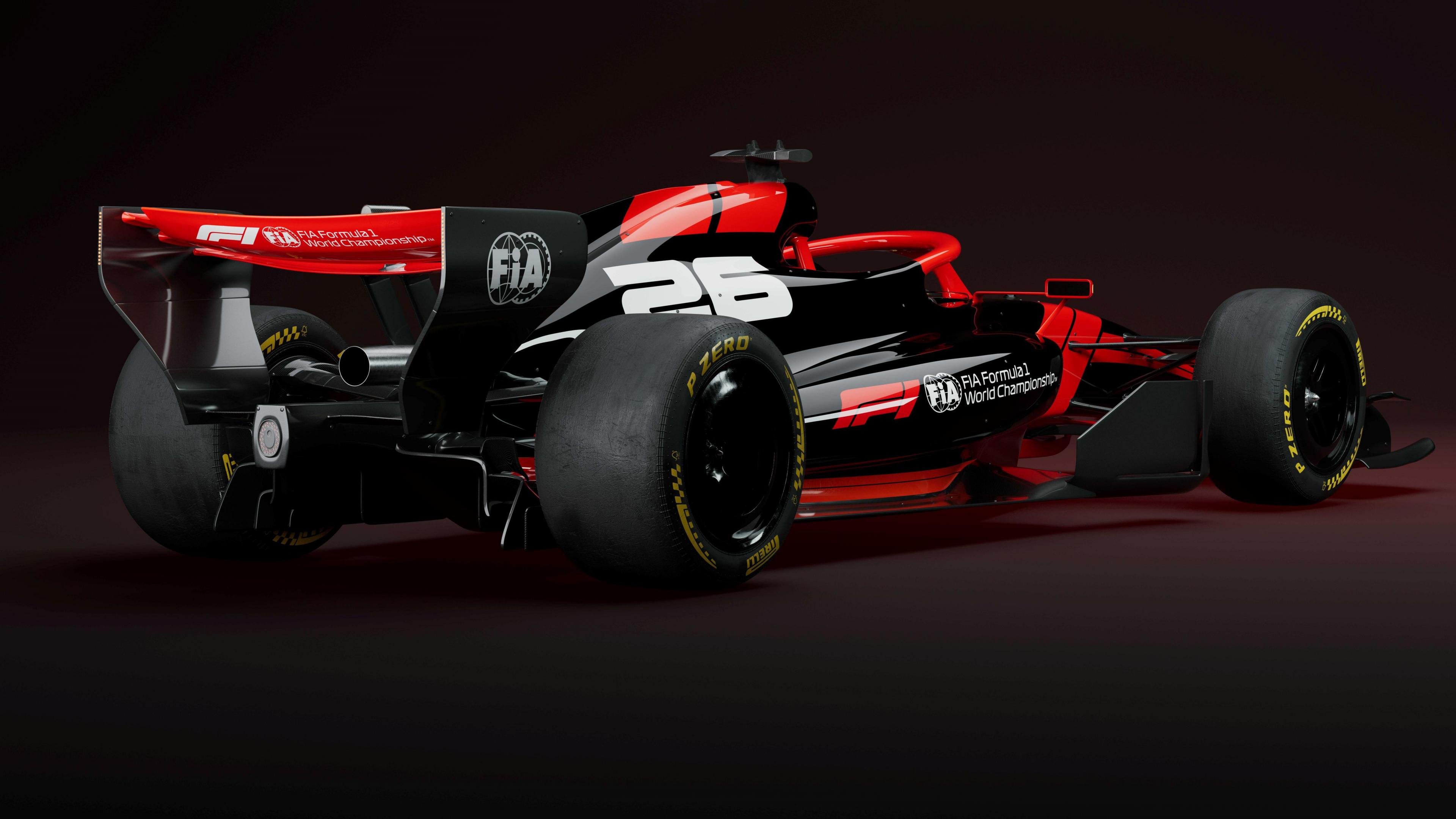
The 2026 Formula 1 cars are expected to be lighter, more agile and sustainable compared to current models.
Formula 1 has introduced the simplified terminology that will be used to explain the advanced features of its upcoming 2026 regulations.
The championship is implementing what is considered the biggest rules overhaul in its illustrious history starting in 2026, featuring revised car and engine specifications and the compulsory introduction of eco-friendly fuels.
The revised engines, which retain the 1.6-litre V6 turbo hybrid, boast a greatly enhanced energy storage, driving major innovations in the cars' aerodynamics.
Over a race distance, competitors will tactically deploy battery power – potentially on flying laps – to extract the peak performance.
Wide-ranging research were undertaken with a diverse audience, including dedicated enthusiasts and casual observers, to determine which phrases would improve understanding of the main elements of the 2026 changes.
The key objective was to present a range of advanced technical aspects of the racing as accessible as possible for the widest audience.
Consequently, initial designations for certain devices – such as "modes labelled X and Z" for the adjustable aero – have been abandoned in preference for intuitive labels that clearly indicate the actual function of the system.
Key Technical Innovations
The FIA states that drivers will have more power to choose strategies regarding battery management, regeneration, and conservation.
The upcoming changes mandate a range of settings that will be shown on broadcast screens to aid the viewers' comprehension of the on-track action.
- Attack Mode: This supersedes the current DRS. It provides a surge of additional ERS power available when a competitor is less than a second the vehicle in front to facilitate an overtake.
- Power Mode: This is a manual energy deployment from the hybrid system that can be utilized during offensive or defensive moves. It provides the driver full engine and battery energy at the activation of a control.
Both of these crucial modes will have to be deployed strategically, as the overall battery capacity is restricted.
- Active Aerodynamics: Both the car's wings change configuration – opening on the high-speed sections for reduced drag and increased velocity, and closing in the corners for peak grip.
- Battery Recharge: Drivers can recharge the energy store with regenerative braking, or during coasting at the end of straights or in corners where only partial power is applied.
What's Changing on the Cars?
The 2026 cars will be smaller and lighter compared to the 2025 spec, with a wheelbase reduced by 200mm to 3,400mm, width narrowed by 100mm – down to 1,900mm – and the lowest permissible weight reduced by 30kg.
Overall downforce is anticipated to be reduced by approximately fifteen to thirty percent, although constructors will undoubtedly recover some as they optimize their packages.
Air resistance has been reduced by 40%. The cars will utilize adjustable aero systems – front and rear wings will move on the straights to reduce drag and increase straightline speed and return into place for peak handling.
Tyres will continue to use the current rim size, but the tyres themselves will be slimmer, by a quarter-centimetre on the front and 30 millimetres on the rear axle.
What's Changing in the Engines?
The new power units will have an approximate 50-50 split in power produced by the petrol engine and the electrical system, increasing from about one-fifth electric power this year.
The hybrid system is simplified through the removal of the complex turbo energy recovery device, the complicated and costly unit that harvested power from the turbocharger.
All vehicles will be mandated to operate on fully sustainable fuel, produced using organic sources or synthetic production methods.
